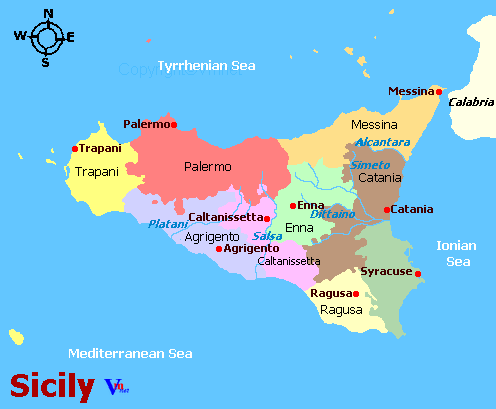
Sicily Wine Region - Italy
Sicily is located in southern Italy, the largest island in the Mediterranean Sea, just off the mainland's
southern tip. The region has one of the longest winemaking histories in the world, with viticulture
introduced by the Phoenicians and later expanded by the Greeks and Romans.
Sicily's climate is predominantly hot Mediterranean, with long, dry summers, mild winters, and
abundant sunshine. Despite the heat, many vineyards are planted at higher elevations, particularly around
Mount Etna, where cooler temperatures help preserve acidity and balance in the wines.
In recent decades, Sicily has shifted from large-scale bulk production to a strong focus on quality wines
and indigenous grape varieties.
Classification Structure
Sicily follows Italy's DOCG, DOC, and IGT classification system.
DOCG (Denominazione di Origine Controllata e Garantita)
- Cerasuolo di Vittoria DOCG
This is Sicily's only DOCG, producing blends of Nero d'Avola and Frappato.
DOC (Denominazione di Origine Controllata)
Key DOC appellations include:
- Etna DOC
- Marsala DOC
- Alcamo DOC
- Monreale DOC
- Noto DOC
- Eloro DOC
- Vittoria DOC
- Pantelleria DOC
- Salaparuta DOC
- Contea di Sclafani DOC
IGT (Indicazione Geografica Tipica)
Widely used for both traditional and international-style wines.
Grape Varieties
Sicily is known for its indigenous grape varieties.
Key red grapes:
- Nero d'Avola - the most important red grape
- Frappato - lighter, aromatic wines
- Nerello Mascalese - key grape for Etna wines
- Nerello Cappuccio
Key white grapes:
- Grillo
- Catarratto
- Inzolia (Ansonica)
- Carricante - important on Mount Etna
- Zibibbo (Muscat of Alexandria) - used for sweet wines
Wine Styles
Sicily produces a wide range of wine styles:
- full-bodied red wines (Nero d'Avola)
- elegant volcanic wines (Etna DOC)
- fresh and mineral white wines
- fortified wines (Marsala)
- sweet wines (Passito di Pantelleria)
Etna wines have gained particular attention for their balance, minerality, and resemblance to cooler-
climate styles despite the island's southern location.
Climate and Geography
Sicily viticulture is shaped by:
- intense sunlight and long growing seasons
- cooling sea breezes
- high-altitude vineyards
- volcanic soils, especially around Mount Etna
These factors create a combination of ripeness and freshness in the wines.
Summary
Sicily is one of Italy's most dynamic wine regions, combining:
- ancient winemaking traditions
- diverse indigenous grape varieties
- volcanic terroirs
- a modern focus on quality production
The region has become increasingly important in both Italian and global wine markets.