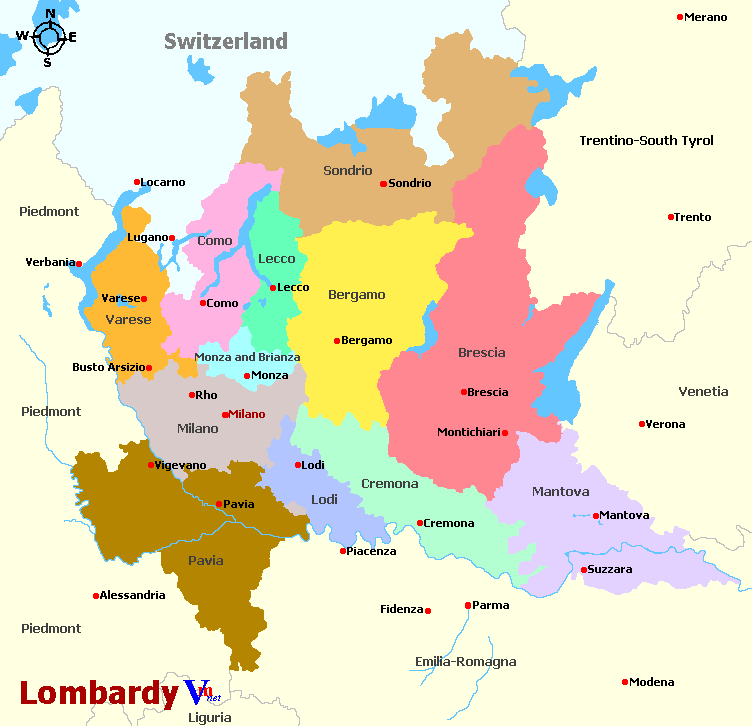
Lombardy Wine Region - Italy
Lombardy is located in northern Italy, bordered by Switzerland to the north and stretching across the Po
Valley to the south. The region includes diverse landscapes ranging from Alpine mountains and glacial
lakes to fertile plains. This geographic diversity creates a wide range of climates and terroirs suitable for
different wine styles.
Viticulture in Lombardy dates back to Roman times, and today the region is known for both high-quality
sparkling wines and distinctive red wines produced in alpine and foothill environments.
Classification Structure
Lombardy follows Italy's DOCG, DOC, and IGT classification system.
DOCG (Denominazione di Origine Controllata e Garantita)
Key DOCG wines include:
- Franciacorta DOCG - Italy's leading traditional-method sparkling wine
- Valtellina Superiore DOCG - Nebbiolo-based wines from alpine terraces
- Sforzato di Valtellina DOCG - Dried-grape (passito-style) red wines
- Oltrepò Pavese Metodo Classico DOCG - Sparkling wines from Pinot Noir
DOC (Denominazione di Origine Controllata)
Important DOC areas include:
- Oltrepò Pavese DOC
- Lugana DOC
- Valcalepio DOC
- San Colombano al Lambro DOC
- Garda DOC
- Curtefranca DOC
IGT (Indicazione Geografica Tipica)
- Provincia di Pavia IGT
- Ronchi Varesini IGT
- Sebino IGT
Grape Varieties
Lombardy grows both international and indigenous grape varieties.
Key red grapes:
- Nebbiolo (Chiavennasca) - dominant in Valtellina
- Barbera
- Croatina
- Pinot Noir
Key white grapes:
- Chardonnay
- Pinot Blanc
- Trebbiano di Lugana (Turbiana)
Wine Styles
Lombardy produces a wide variety of wine styles:
- traditional-method sparkling wines (Franciacorta)
- elegant alpine red wines (Valtellina)
- fresh white wines (Lugana)
- still red wines from Oltrepò Pavese
Franciacorta is particularly notable for its similarity in production method to Champagne, using
Chardonnay and Pinot Noir.
Valtellina wines are known for:
- high acidity
- mineral character
- long aging potential
Climate and Geography
Lombardy's vineyards are influenced by:
- Alpine conditions in the north
- moderating effects of large lakes (Garda, Iseo)
- fertile plains in the south
- varied soils including glacial deposits, limestone, and alluvial soils
This diversity allows the region to produce both cool-climate and warmer-climate wine styles.
Summary
Lombardy is one of Italy's most diverse wine regions, combining:
- world-class sparkling wines (Franciacorta)
- alpine Nebbiolo wines (Valtellina)
- varied climates and terroirs
- both traditional and modern winemaking styles
The region plays a key role in northern Italian wine production.