
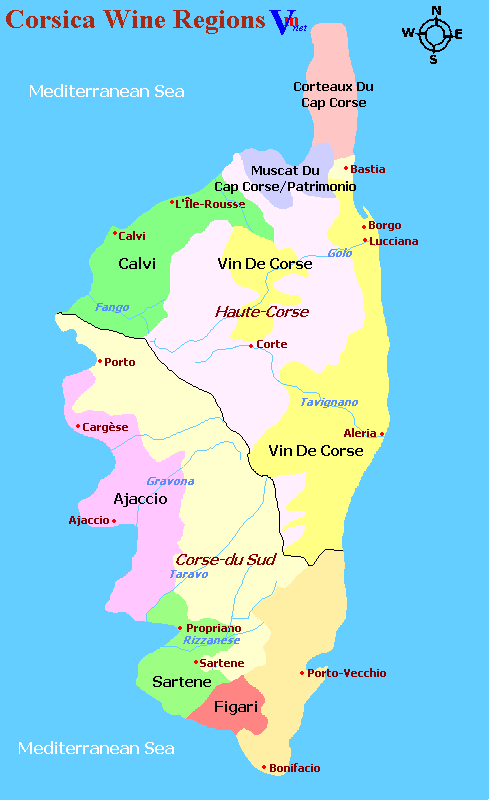
Corsica is a Mediterranean island southeast of mainland France and west of Italy. Although politically part of France, its geography and climate give it a distinct wine identity influenced by both French and Italian traditions. Vineyards are planted along coastal plains and foothills, where maritime influence moderates summer heat and mountain elevations provide cooler night temperatures.
Corsican viticulture dates back to ancient Greek settlement and later Roman development. The island's rugged interior and diverse soils - including granite, schist, and limestone - contribute to varied terroir expression across subregions.
Wines are predominantly dry and reflect Mediterranean freshness, herbal aromatics, and moderate alcohol balanced by acidity from elevation and sea influence. Red wines range from structured and age-worthy to lighter, aromatic styles, while whites are typically crisp and mineral-driven. The island also produces limited sweet and fortified wines under specific AOCs.
Corsica remains a distinct and geographically unique part of France's wine landscape, combining insular terroir with regulated AOC classification.