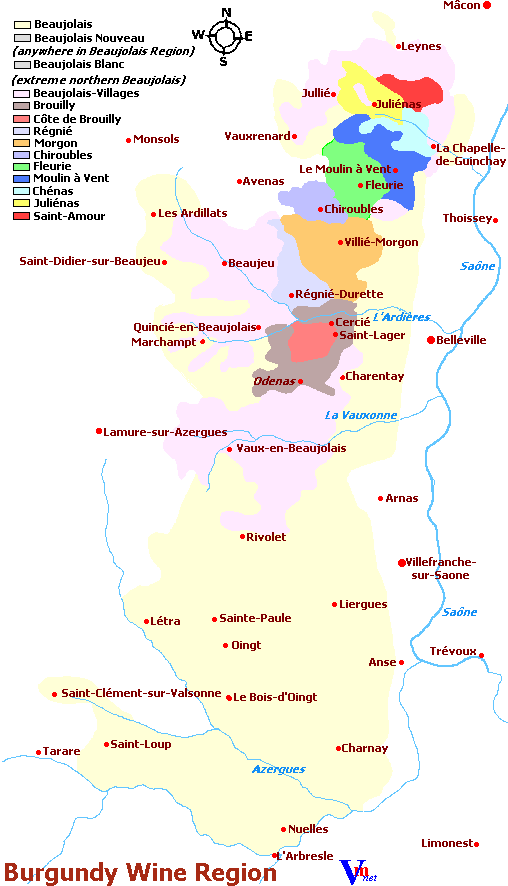
Burgundy Wine Region - France
Burgundy (Bourgogne) is located in eastern France, stretching from Chablis in the north to the Mâconnais
in the south. Unlike Bordeaux, Burgundy emphasizes terroir and individual vineyard sites rather than
blended regional identity. Vineyards are planted along a limestone escarpment known as the Côte d'Or,
where subtle variations in slope, soil, and exposure define quality and classification.
The climate is predominantly continental, with cold winters, warm summers, and occasional frost and hail
risks. Limestone and marl soils play a central role in shaping wine character.
Regional Structure
Burgundy is divided into several principal subregions:
- Chablis - Northernmost area, producing mineral-driven Chardonnay wines.
- Côte de Nuits - Known for high-quality Pinot Noir (Gevrey-Chambertin, Vosne-Romanée,
Chambolle-Musigny).
- Côte de Beaune - Produces both red and white wines, including Meursault, Puligny-Montrachet,
and Pommard.
- Côte Chalonnaise - More accessible wines from villages such as Mercurey and Rully.
- Mâconnais - Warmer southern area, dominated by Chardonnay (Pouilly-Fuissé).
- Beaujolais - Often administratively separate but historically linked.
AOC Hierarchy
Burgundy's classification system is vineyard-focused and structured into four levels:
- Regional AOC (e.g., Bourgogne AOC)
- Village AOC (e.g., Meursault, Gevrey-Chambertin)
- Premier Cru (designated vineyard sites within villages)
- Grand Cru (top single-vineyard sites such as Montrachet, Romanée-Conti)
Grand Cru vineyards represent a small percentage of total production and are highly site-specific.
Grape Varieties and Styles
Burgundy is centered on two principal grapes:
- Pinot Noir (red)
- Chardonnay (white)
Smaller plantings of Aligoté and Gamay also exist. Wines are typically single-varietal rather than blends,
with strong expression of soil and microclimate. Red wines range from delicate and aromatic to structured
and age-worthy. White wines vary from crisp Chablis to rich, barrel-aged Côte de Beaune examples.
Burgundy is widely regarded as one of the most terroir-driven wine regions in the world and serves as a
reference point for Pinot Noir and Chardonnay production globally.