
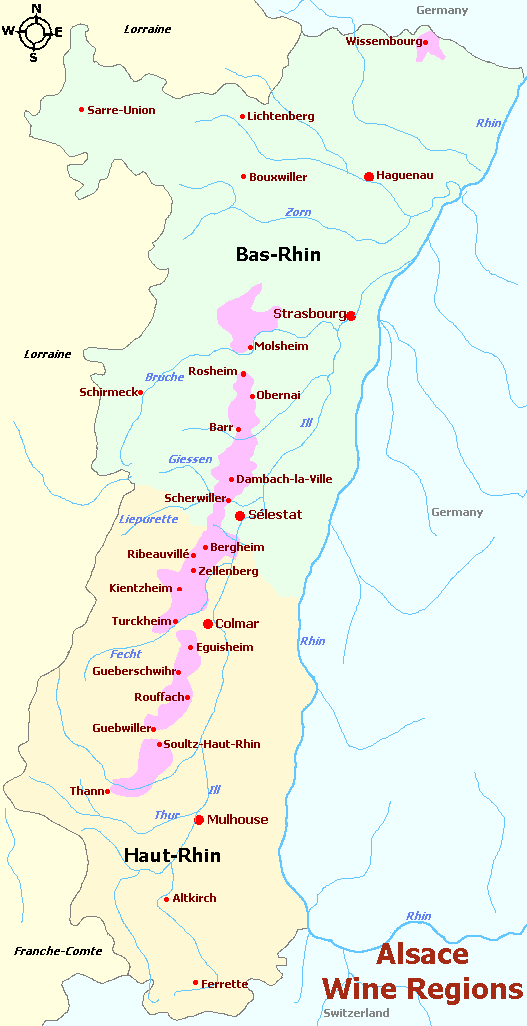
Alsace is located in northeastern France along the border with Germany, between the Vosges Mountains and the Rhine River. The region has a semi-continental climate, protected by the Vosges, making it one of the driest wine regions in France. This rain shadow effect allows grapes to ripen fully while retaining natural acidity.
Unlike most French regions, Alsace wines are typically labeled by grape variety rather than by village name. Vineyards are planted on a wide range of soils, including granite, limestone, sandstone, and volcanic formations, contributing to distinctive terroir expression.
Other permitted varieties include Pinot Blanc, Sylvaner, and Pinot Noir (the only significant red grape in the region).
Wines are predominantly dry, though styles range from crisp and mineral-driven Rieslings to richly textured Pinot Gris and intensely aromatic Gewurztraminer. Late-harvest wines can be sweet and highly concentrated. Cremant d'Alsace has become an important sparkling category within the region.
Alsace remains one of France's most distinctive wine regions, combining French regulatory structure with strong historical and cultural ties to Central Europe.