
Bulgaria
Go to: Go to Wine Regions MapWine in Bulgaria
Bulgaria is located in Southeast Europe on the Balkan Peninsula, bordered by Romania, Serbia, North Macedonia, Greece, Turkey, and the Black Sea. Viticulture has a long history in the region, supported by diverse landscapes and a climate that combines continental and Mediterranean influences.
Wine production is commonly grouped into five main wine regions. The Danubian Plain in the north produces fresh white and red wines influenced by continental conditions. The Black Sea Region in the east is traditionally known for aromatic white varieties. The Rose Valley, located between the Balkan Mountains and the Sredna Gora range, supports both white and red wines with balanced acidity. The Thracian Lowland in southern Bulgaria is one of the country's most important red wine areas, benefiting from warmer temperatures. The Struma River Valley in the southwest has a strong Mediterranean influence and is notable for indigenous grape cultivation.
Bulgaria is particularly associated with native grape varieties such as Mavrud, Melnik, Gamza, Dimiat, and Misket, alongside international varieties including Cabernet Sauvignon, Merlot, and Chardonnay. Wines are predominantly dry, with styles ranging from aromatic whites to structured reds.
Map of Bulgaria
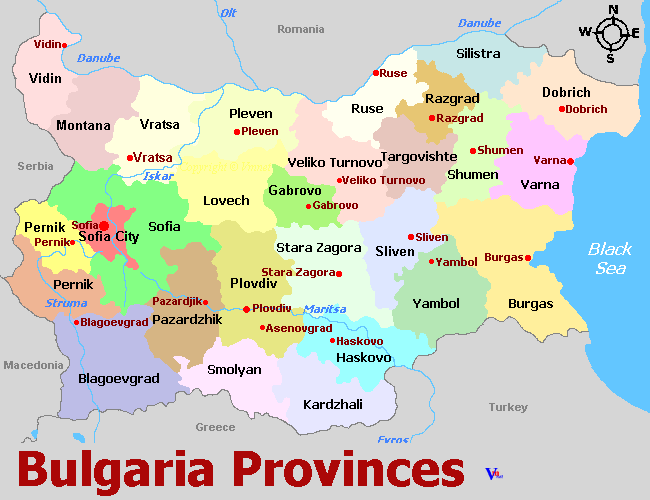
Blagoevgrad
Burgas
Dobrich
Haskovo
Gabrovo
Kardzhali
Kyustendil
Lovech
Montana
Pazardzhik
Pernik
Pleven
Plovdiv
Razgrad
Ruse
Shumen
Silistra
Sliven
Sofia
Sofia_Province
Smolyan
Stara Zagora
Targovishte
Varna
Veliko Turnovo
Vidin
Vratsa
Yambol
»» Wine Regions Map
Maps
Africa Asia Europe North America South America Oceania World MapContributed content used with permission.
All Rights Reserved