
Wine Regions of Bosnia and Herzegovina
Wine in Bosnia and Herzegovina
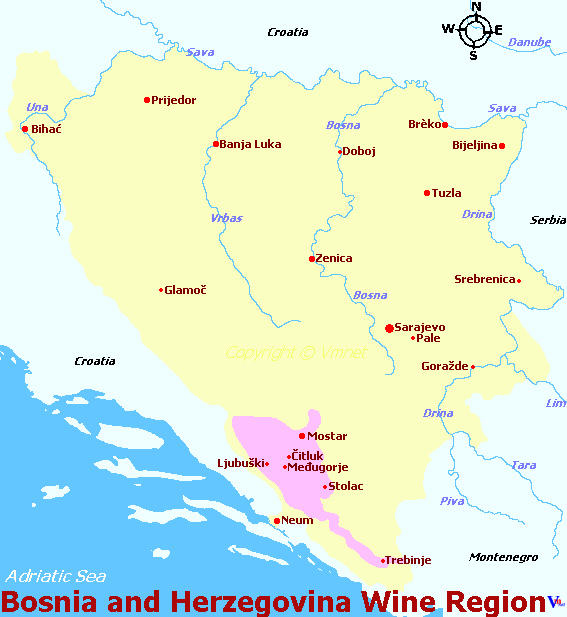
Bosnia and Herzegovina is located in Southeast Europe on the western Balkan Peninsula, bordered by Croatia, Serbia, and Montenegro. Viticulture is concentrated mainly in the southern regions, where Mediterranean influence moderates the climate, while much of the country remains mountainous and cooler.
The historic centre of wine production lies in Herzegovina, particularly around the Neretva River valley near Mostar and Capljina. Warm summers, limestone soils, and sheltered valleys provide favorable conditions for grape growing. Wine production in central and northern Bosnia is limited and largely small-scale.
Bosnia and Herzegovina is known for its indigenous grape varieties, especially Zilavka (white) and Blatina (red), which form the backbone of local wine production. Other native and regional varieties include Trnjak and Vranac, alongside international grapes such as Cabernet Sauvignon, Merlot, and Chardonnay. Wines are primarily dry, with fresh whites and medium-bodied reds reflecting the regional climate and terrain.
Map of Bosnia and Herzogevina Wine Regions
Wine Region
»»Bosnia and Herzogevina's Main Map
Maps
Africa Asia Europe North America South America Oceania World MapContributed content used with permission.
All Rights Reserved